Find out what is active
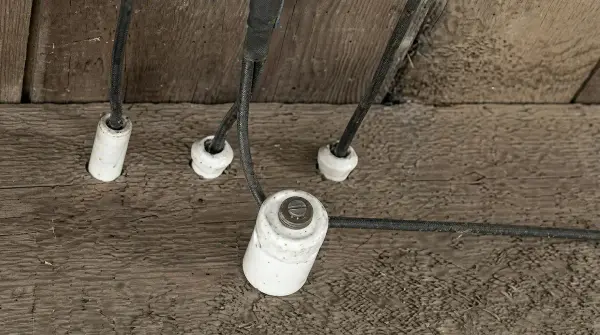
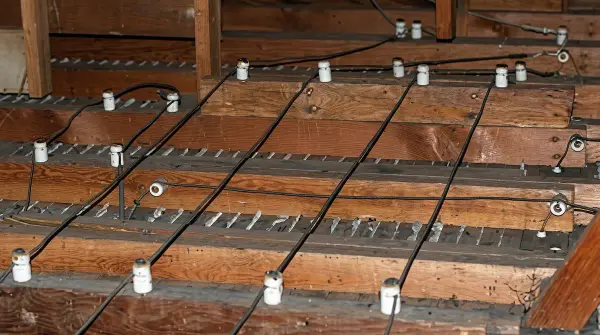
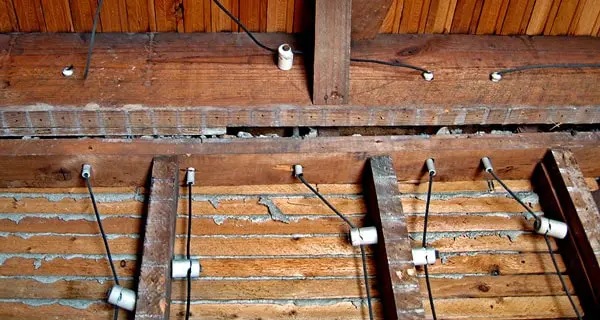
Visible porcelain knobs may belong to disconnected remnants or to circuits still supplying lights and outlets. A qualified electrical assessment establishes the difference.

Keep the character of your older home. Start with a clear plan for the wiring you use today.
Sylvester Electric helps homeowners in the Merrimack Valley and Southern New Hampshire assess active knob and tube circuits and plan replacement around finished rooms, wiring access and household needs. A newer panel or renovated room does not establish that every old circuit has been replaced.
Call (978) 957-3422 or request an estimate below. Share any inspection report or insurer notice when you contact us.
Related questions? Read about electrical panel replacement or electrical troubleshooting.
Technician arrived on time, he repaired the problem quickly and efficiently and I was happy with the cost ...not overcharged. I have already recommended the company to my friends and relatives.
★★★★★
Judy D.
They installed smoke and carbon monoxide detectors and two light fixtures. They were easy to work with and very professional.The technician was personable and knowledgeable.
★★★★★
Elena C.
The expertise and care applied to both fixing and installing new electrical wiring has been first rate. We have been impressed by the efficiency and ease of contact with the team. We recommend Sylvester for anyone looking for top tier and reliable electrical work at a fair price.
★★★★★
Anna K.
You do not need to know how much wiring is hidden behind your walls before you call. Tell us what you have found and what prompted the project. Sylvester Electric serves the Merrimack Valley and nearby Southern New Hampshire communities from Dracut.
Visible porcelain knobs may belong to disconnected remnants or to circuits still supplying lights and outlets. A qualified electrical assessment establishes the difference.
Discuss affected circuits, access through finished rooms, household needs and any related work. Partial replacement and a whole-home rewire are different scopes.
Share your inspection report, renovation plans or insurer's written notice. The proposed electrical work and the documentation requested should be considered together.
Knob and tube was used during the early electrification of homes. Mass Save describes it as common from the 1880s through the 1940s. That history makes it relevant when assessing some older Massachusetts and New Hampshire houses, but a home's age does not establish its wiring type.
An older home may contain original circuits alongside later cable, new outlets and renovated rooms. A kitchen renovation can update the kitchen while leaving wiring elsewhere in place. A newer breaker panel distributes power to the circuits connected to it; it does not prove those circuits were rewired.
Porcelain supports or old wire left in an attic are not enough to determine whether a circuit is energized. Disconnected remnants and active concealed wiring can both be present. Do not touch, cut or test unfamiliar wiring yourself.
Attic and basement access can help establish routes. Plaster walls, finished ceilings and earlier additions can conceal connections and changes. Share previous electrical records if you have them; an accessible inspection cannot automatically prove what is inside every closed cavity.
Deteriorating wire insulation, unsuitable alterations, loads beyond a circuit's capacity and the lack of an equipment grounding conductor are concerns to evaluate. The presence of knob and tube alone does not tell you the condition of every connection or mean that every existing installation is automatically illegal.
Repeated breaker trips, flickering lights, unusual buzzing, heat damage or electrical shocks need diagnosis. These symptoms do not identify knob and tube by themselves. Describe the symptoms when booking so the office can distinguish troubleshooting from an estimate for planned work.
Keep the next step safe. Do not remove electrical covers, disturb old wiring or attempt energized testing. If there is smoke or an active fire, leave the area and call 911.
The amount of active wiring, its condition, circuit interconnections and the goals of the project determine the scope. Replacing selected circuits may be appropriate in some homes; a wider rewire may be needed in others. The estimate should identify what will be replaced and what will remain.
Accessible basements and attics may offer wiring routes, but plaster, finished rooms, concealed connections and previous renovations can require openings. Discuss likely access points and protection of work areas before work begins. No promise of damage-free rewiring applies to every home.
That depends on safe access, work areas and which circuits will be unavailable. Explain any needs involving medical equipment, heating, refrigeration, children, pets or working from home. Confirm the occupancy and outage plan for your project rather than assuming uninterrupted power.
Confirm this in the written scope. Electrical access openings, plaster or drywall repair, painting and any work by another trade are separate responsibilities unless expressly included. Do not assume the electrical estimate includes a finished decorating repair.
Permits, inspections and outages: confirm the required electrical permit, inspection stages, who handles each step, anticipated interruptions and any utility company involvement before scheduling. A contractor's assessment is separate from the inspection required by the local authority.
Not automatically. Rewiring addresses the branch circuits carrying power through the home. Electrical panel replacement concerns the distribution equipment. A 200-amp service upgrade concerns the available electrical supply and associated equipment.
Panel condition, circuit space, electrical demand and planned equipment guide those separate decisions. A replacement panel does not itself replace old branch wiring, and knob and tube replacement does not automatically require a larger service. Ask for any related panel or service work to be explained and priced in the proposed scope.
Insurance eligibility, an electrical code requirement and an energy program's conditions are different questions. An electrician can assess wiring and carry out the agreed electrical work. Your insurer decides whether it will offer or continue coverage and what documentation it will accept.
The Massachusetts Division of Insurance identifies old wiring as one factor an insurer may consider under its own underwriting criteria. That is not a statement that every Massachusetts insurer rejects every home with knob and tube.
A new application, a renewal decision and cancellation during an existing policy term are distinct situations. Ask your insurer or agent which applies to your notice and what is required for your specific property.
Massachusetts Division of Insurance guidanceAsk your insurer or licensed agent about the current requirements for your New Hampshire policy and property. Do not apply another carrier's Massachusetts rules to an NH home.
New Hampshire law treats cancellation and nonrenewal as distinct actions and requires a notice to state its specific reasons. If you receive a notice, ask about the effective date, the work requested and your options promptly.
New Hampshire insurance notice requirementsIf an insurer requests an assessment, replacement or proof of completion: provide the written notice, relevant inspection findings, the areas or circuits identified, the stated deadline and the exact documents requested. Ask whether the insurer needs an assessment report, a description of completed work, permit or inspection records, photographs or another specific form of evidence. Confirm that list with the insurer before commissioning work.
A replacement estimate is not insurance approval. Completing electrical work does not guarantee coverage, renewal, a lower premium or reimbursement. Availability of a policy and payment for a particular loss or for replacing old wiring are separate decisions. See the insurance questions below.
Insurance information checked October 18, 2026. MA consumer insurance FAQsNH Insurance Department consumer resources
Mass Save warns about insulation being blown around knob and tube wiring. Have the electrical conditions assessed before insulation or air sealing proceeds; do not cover or disturb unfamiliar wiring yourself.
If you are using Mass Save or NHSaves, ask the program administrator for the current requirements for the proposed areas, any electrician documentation, and any available assistance before authorizing work. Program participation and funding are separate from electrical code compliance and insurance underwriting. Do not assume one program's rules or incentives apply to a different state or property.
Mass Save: saving energy safelyNHSaves: confirm your program requirements
Program resources checked October 18, 2026. Eligibility, documentation and assistance must be confirmed for your project. No program affiliation or guaranteed incentive is implied.
The extent of active wiring, circuit layout, number of rooms, attic and basement access, plaster and finished surfaces, occupied work areas and any related electrical corrections all affect the proposed work. Concealed conditions may need further investigation before the full scope is known.
Permits, inspection availability, equipment, access and coordination with other trades can affect scheduling. Share an insurer's deadline or a renovation milestone early, and confirm what can actually be scheduled. There is no universal rewiring price or completion time.
Provide your town, known affected rooms, inspection notes, renovation plans and relevant insurer correspondence. Photos from safely accessible locations can help; leave covers and wiring undisturbed.
Our office arranges the appropriate appointment and explains applicable charges. Estimates for planned work and diagnosis of an existing fault are different services.
Discuss assessment limits, replacement circuits, access openings, related panel decisions, permits, outages, restoration and price before authorizing the work.
An online request does not itself confirm an appointment, project schedule or insurer acceptance.
These are general service reviews, not claims about knob and tube projects.
“Carlos did an excellent job.”
PETER Lucas · Google review · October 18, 2026
“Great work and great installer”
Keith Thomasset · Google review · October 16, 2026
Read Sylvester Electric reviews on Google
Family-owned since 1979 and based in Dracut, Sylvester Electric helps homeowners plan electrical work across our nearby MA and Southern NH service area. Bring the wiring questions, access concerns and paperwork you already have.
Related planning: renovation wiring, electrical troubleshooting and our service area.
Have a qualified electrician assess the circuits. Ceramic supports, two-prong outlets and the home's age do not establish whether the wiring is active. Disconnected remnants and concealed active circuits can coexist. Leave testing and electrical covers to a qualified professional.
Your insurer or licensed agent must confirm eligibility for your specific property and policy. Massachusetts guidance identifies old wiring as an underwriting factor, but there is no single answer for every insurer. Ask separately about a new application or an existing policy renewal, and obtain any requirements in writing.
Share the insurer's written notice, inspection report, property address, stated deadline and the exact documentation requested. Ask the insurer whether it needs an electrical assessment, a description of completed work, permit or inspection records, photographs or a specific form. Share that list when requesting an estimate.
No. The insurer makes the coverage and underwriting decision. An electrician's assessment, completed replacement or permit inspection does not guarantee approval, renewal, continued coverage or lower premiums. Ask the insurer to confirm acceptance of the required documentation.
Do not assume replacement will be reimbursed. Ask your insurer about your policy's terms, exclusions and any applicable claim before authorizing work. The cost of updating aging wiring and damage from a particular insured event are different questions. An estimate is not a coverage decision.
The schedule depends on active circuits, access, concealed conditions, occupied rooms, related work and permit or inspection arrangements. Share any insurance or renovation deadline early, then confirm the actual project plan. There is no single completion time for every home.
